
Exploiting the Lucky Loser Anomaly: A First-Round Betting Blueprint
23 Dec 2025
Read More
Left-Handed Advantage in Tennis: How Southpaws Shape Matchups and Betting Outcomes
- Lefties in tennis use unique spins and angles to disrupt right-handers
- Players with single-handed backhands often struggle against southpaws
- Strategic betting can capitalize on the overlooked left-handed advantage
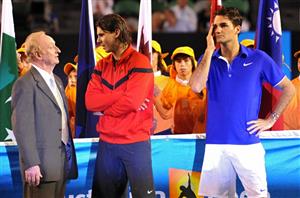
Few players felt the southpaw effect as brutally as Federer did against Nadal’s lefty patterns.
(credit: Getty)
The Southpaw Sorcery: Unpacking the Left-Handed Advantage in Tennis
- The Southpaw Sorcery: Unpacking the Left-Handed Advantage in Tennis
- The Spin and Angle Anomaly
- Players on the Struggle Bus vs. Southpaws
- The Southpaw Slayers: Who Excels?
- Case Study: Nadal's Dominance Over Federer
- How Southpaw Matchups Change Betting Markets
- Practical Betting Checklist for Southpaw Matchups
For bettors, this “southpaw effect” is one of the most overlooked matchup edges. Understanding how a left-hander changes the geometry of rallies can instantly sharpen your predictions, whether you’re betting match-winners, handicaps, or reacting live in-play.
Southpaws create problems right-handers rarely train for, which turns their matchups into hidden betting value.
The Spin and Angle Anomaly
The core of the left-handed advantage lies in the reverse spin and angles they generate, which fundamentally disrupt a right-handed player's muscle memory and standard rallying patterns.
- The Killer Serve (Ad Court): On the Ad court (Advantage court, for all game points except 40-40/Deuce), a lefty's slice serve out wide naturally curves away from a right-hander, pulling them far off the court. Crucially, this serve targets the right-hander's backhand, often their weaker wing, setting up an easy forehand winner into the open court for the lefty. A right-hander’s slice serve, by contrast, targets a lefty’s stronger forehand on the Ad court.
- The Cross-Court Forehand: In a standard cross-court rally between a righty and a lefty, the exchange is typically lefty Forehand to righty Backhand. The left-handed topspin forehand kicks high and wide into the right-hander's backhand. This unusual height and movement forces the right-hander to hit a difficult, defensive backhand, or awkwardly run around it to use their forehand, giving the lefty control of the point.
- Lack of Familiarity: Right-handed players spend over 90% of their practice and match time against other right-handers. This lack of exposure to the inverted spin and angle dynamics makes it hard to adjust to the unique trajectories and tactical demands of facing a southpaw. By the time a right-hander finds their rhythm, the match can be over.
Lefty angles warp the geometry of the court, and most right-handers simply aren’t trained to handle it.
Players on the Struggle Bus vs. Southpaws
Certain right-handed players are historically vulnerable to the southpaw style, making them key targets for anti-bets. The biggest disadvantage is reserved for players with a single-handed backhand (1HBH), as the high-bouncing topspin is extremely difficult to manage.
Player Types Most Vulnerable to Left-Handers
| Player Profile | Struggle Against Lefties | Rationale for Vulnerability |
|---|---|---|
|
1HBH Specialists (e.g., Federer, Wawrinka) |
High topspin forehands to the backhand, slice serves on the Ad court. |
The high, kicking topspin ball lands above the shoulder/strike zone, making it very difficult to execute a powerful 1HBH return or counter-attack. |
|
Baseline Defenders (Relies on consistency) |
Sharp angles and wide slice serves on the Ad court. |
These shots pull the player so far out of position that even retrieving the ball often leaves an open court for the lefty to finish the point. |
|
Serve-and-Volleys (Traditional style) |
Kick and slice serves from the lefty. |
The unique spin on the serve makes the return awkward, which is vital for a smooth net approach. A poor return leads to a disadvantaged volley position. |
Some right-handed styles naturally crumble against left-handers, and identifying these profiles early can turn southpaw matchups into some of the most profitable anti-bet opportunities.
The Southpaw Slayers: Who Excels?
While the lefty advantage is real, it is not absolute. Certain player styles and specific technical strengths help right-handers neutralize the threat, providing excellent betting value when they face a southpaw.
Player Profiles That Excel Against Left-Handers
| Player Profile | Advantage Against Lefties | Rationale for Success |
|---|---|---|
|
2HBH Specialists (e.g., Djokovic, Murray) |
High Topspin Forehands to the backhand. |
The two-handed backhand handles the high-bouncing ball much better, providing stability, leverage, and the ability to drive through the shot, turning defense into neutral or offense. |
|
Forehand-Dominant (Inside-Out) |
Centralised ball placement and hitting inside-out forehands. |
These players intentionally hit into the lefty's forehand or the middle of the court to avoid exposing their backhand. They also run around their backhand frequently to deploy their dominant forehand. |
|
Top-Tier Returners |
Wide slice serves on the Ad court. |
Elite returners anticipate the angle and use their own footwork and leverage to block or drive the return deep, eliminating the lefty’s easy put-away opportunity on the next shot. |
Beating left-handers isn’t guesswork. Players like Djokovic built entire parts of their game around neutralizing Nadal’s lefty patterns, proving that the right tools and tactics can flip the matchup completely.
Case Study: Nadal's Dominance Over Federer
The ultimate proof of the southpaw effect is the legendary rivalry between Rafael Nadal (lefty, 2HBH) and Roger Federer (righty, 1HBH). Nadal’s entire strategy revolved around exploiting the inherent mismatch, backed up by the following head-to-head (H2H) statistics.
Nadal's heavy, high-bouncing, cross-court topspin forehand was the "Battering Ram" that hammered into Federer's single-handed backhand relentlessly, especially on slow surfaces like clay.
Federer vs. Nadal: The Surface Divide (Nadal Leads 24–16 Overall)
| Surface | Matches Played | Nadal’s Record | Federer’s Record | Nadal’s Win % |
|---|---|---|---|---|
|
Clay |
16 |
14 |
2 |
87.50% |
|
Hard |
20 |
9 |
11 |
45.00% |
|
Grass |
4 |
1 |
3 |
25.00% |
Federer was arguably the biggest victim of the southpaw effect, with Nadal’s lefty topspin forehand exposing the one-handed backhand in a way no other rival could replicate.
Betting Takeaways from the H2H:
- Clay Court Lopsidedness: Nadal’s 87.5% win rate on clay is the most telling stat. On this slower surface, his topspin had more time to bite and kick higher, maximizing the difficulty for Federer’s 1HBH. This match-up was often a "lock" bet for Nadal on clay.
- Hard Court Neutralization: On faster hard courts, the ball skids lower, giving Federer less trouble with the high bounce. Federer’s 11-9 lead on hard courts in their later career (when he improved his backhand) shows the gap narrows when the spin factor is reduced.
- The Lefty Advantage is Surface-Dependent: While Nadal's left-handedness was a constant, his dominance was amplified on clay, where the natural characteristics of the surface maximized the disadvantage for the right-handed 1HBH opponent.
In betting terms, targeting a 1HBH player on a slow surface against a high-quality southpaw is an angle you can't afford to ignore.
How Southpaw Matchups Change Betting Markets
Markets often underestimate the left-handed effect, especially in early rounds or when a “bigger name” right-hander is involved. Recognizing where patterns flip gives bettors a real edge.
When to Upgrade a Left-Hander in Your Bets
| Scenario | Why It’s Valuable |
|---|---|
|
Right-hander has a shaky backhand |
Lefty will relentlessly target it |
|
Court is slow or high-bouncing |
Lefty topspin becomes devastating |
|
Southpaw has a strong ad-court serve |
Big advantage on pressure points |
|
Opponent has limited experience vs lefties |
Adjustment curve creates slow starts |
Practical Betting Checklist for Southpaw Matchups
When a left-hander is involved, small matchup details can swing the odds. Checking the opponent’s backhand quality, surface conditions, serve patterns, and past results against lefties helps you spot value that most bettors overlook.
Southpaw Betting Checklist
| Question | Betting Interpretation |
|---|---|
|
Does the right-hander have a solid backhand? |
If no, downgrade them heavily |
|
Is the court slow or bouncy? |
Upgrade the lefty |
|
Does the lefty have a strong ad-side serve? |
Break-point advantage = elite |
|
Has the right-hander historically struggled vs lefties? |
Check H2H for patterns |
|
Is the lefty aggressive or grinding? |
Aggressive = more volatility; grinders = safer picks |
Latest News
-
 Lucky Loser Edge
 -
Grand Slam BettingThe Grand Slam Effect: Why Best-of-Five Makes Favorites the Safest Bets23 Dec 2025 Read More
-
Tennis Tour TiersMastering Tennis’s Multi-Tiered Tours: How Each Level Changes Your Betting Edge23 Dec 2025 Read More
-
Reading MomentumThe Invisible Edge: How Momentum and Psychology Shape Tennis Betting23 Dec 2025 Read More