Coco Gauff: Power, Poise, and a New American Era
16 Dec 2025
Read More
Aryna Sabalenka: The Making of a Powerhouse
- Aryna stands out for her aggressive baseline style and powerful serves
- Bypassed traditional junior competitions for ITF experience
- Off the court, she maintains a contrasting, more relaxed persona
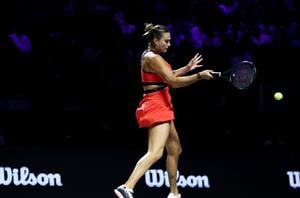
Aryna Sabalenka in full flow, unleashing her trademark power game built around first-strike aggression and physical dominance from the baseline.
(credit: Getty)
- Origins in Minsk
- First Steps in Tennis
- An Unconventional Junior Path
- Turning Professional the Hard Way
- Breakthrough and Recognition
- Playing Style and Competitive Identity
- Personality and Public Image
A multiple Grand Slam champion and former world No. 1, she represents the high-risk, high-reward edge of modern women’s tennis. Her matches are not about patience or attrition, but about who can withstand the pressure when the ball starts flying. Sabalenka does not just look to win rallies. She looks to end them, and that mindset has made her one of the defining forces of the current era.
Origins in Minsk
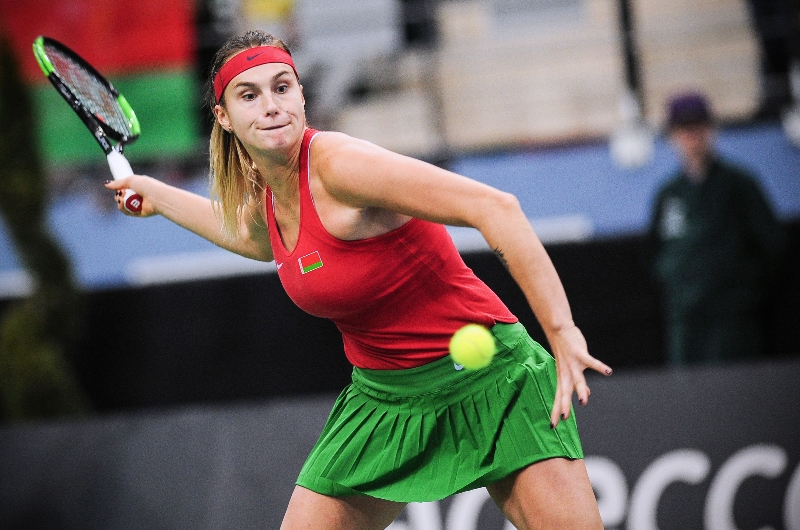
Her introduction to tennis was almost accidental. As a child, she was riding with her father when he spotted a set of tennis courts, pulled over, and encouraged her to try hitting a few balls. She took to it immediately. What started as a spontaneous detour quickly became something more serious, with Sabalenka drawn to the physicality and freedom of the game. That unplanned beginning would eventually grow into a career defined by power, intensity, and a willingness to play on her own terms.
First Steps in Tennis
Aryna Sabalenka began playing tennis around the age of six, training initially at local clubs in Minsk. From the start, her physical power was impossible to miss. Hitting hard was never the problem. The real work was learning how to harness that strength, control it, and build patterns around it rather than letting it run unchecked.
A key step came in 2014 when she moved into training at the National Tennis Academy. The environment brought more structure, higher-level coaching, and stronger daily competition. It also put her firmly on the radar of the Belarusian Tennis Federation, who quickly recognized both her physical upside and her competitive edge. As a result, she was integrated into national programs and Fed Cup environments earlier than most players her age, gaining valuable exposure to high-pressure matches long before she reached the main tour.
An Unconventional Junior Path
Instead, her development took a different route. The focus was on smaller junior tournaments and an early move into women’s ITF events, with the belief that her game would grow faster against adult opposition. Given her raw power, learning how to manage pace, pressure, and physicality at that level was seen as more valuable than chasing junior prestige.
That choice meant there was very little hype around her name early on. When she eventually broke onto the WTA radar, it felt sudden to many fans. In reality, the rise was built on years of quiet work in lower-profile tournaments, where her game was being shaped away from the spotlight.
Turning Professional the Hard Way
Aryna Sabalenka began appearing on the ITF Women’s Circuit as early as 2012, even before she was playing regularly on the junior tour. Her professional debut came in her hometown of Minsk, and the early stages were tough. She struggled to win main-draw matches in her first ITF events and spent a long stretch learning the realities of professional tennis the hard way. Her first pro win did not arrive until late 2014, in Istanbul, after repeated early exits.
Things began to shift once she started training full-time at the National Tennis Academy and, in 2015, redirected her focus almost entirely toward professional events at the urging of the Belarusian Tennis Federation. By 2016, she had become a regular presence on the ITF circuit. Progress came through volume rather than sudden breakthroughs, with ranking points, match toughness, and belief built week by week. That grind laid the foundation for the explosive rise that would follow later on the WTA Tour.
Breakthrough and Recognition
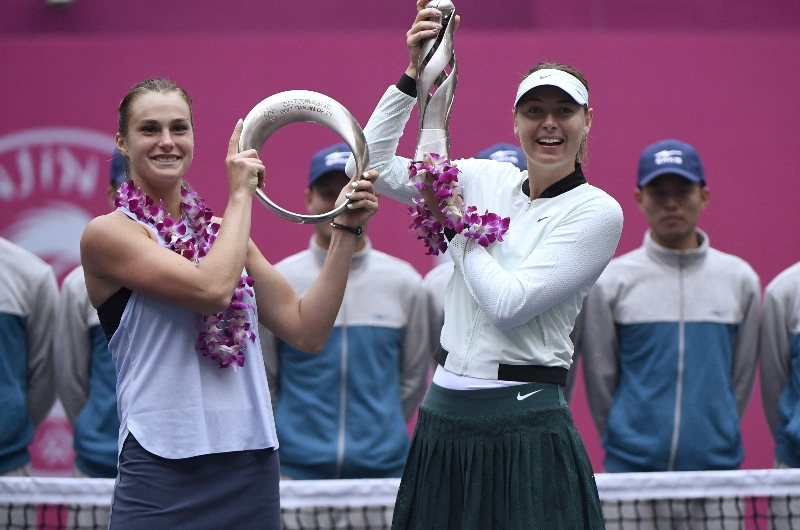
Strong WTA results soon followed. Big titles in the late 2010s, most notably Wuhan Open, drove a rapid climb up the rankings and built her reputation as one of the tour’s most dangerous, momentum-based power hitters. By 2021, two Grand Slam semifinal runs confirmed that her game could survive the physical and mental demands of Slam tennis, not just short bursts of form.
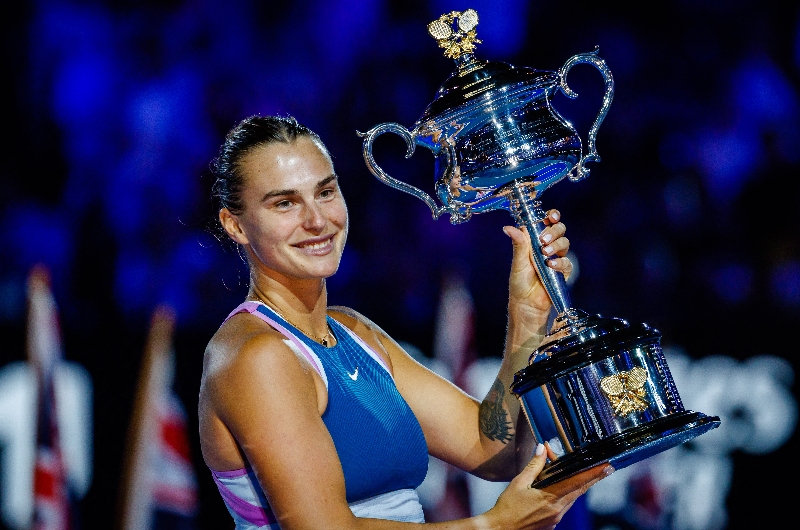
The real inflection point came at the Australian Open in 2023, where she captured her first major singles title. That win marked a clear shift in perception. Sabalenka was no longer viewed only as a volatile threat, but as a true elite presence. Subsequent Slam titles and a sustained spell near the top of the rankings have since cemented her as the benchmark for aggressive, first-strike tennis on the women’s tour.
Playing Style and Competitive Identity
At her core, Aryna Sabalenka plays an ultra-aggressive baseline game built around pace and early control. The forehand is huge, flat, and compact, capable of blowing matches open but also prone to errors if the timing slips. The backhand is just as powerful and often more reliable under pressure, giving her a true two-wing attack.
Her serve is one of the biggest weapons in women’s tennis. Once undermined by double faults, it has become far more stable through technical and mental refinement without losing speed. Sabalenka’s patterns are simple and direct: big serve, aggressive return, immediate baseline pressure.
Mentally, she is fearless. Even in tight moments, her instinct is to keep going for her shots. What has evolved is her risk management. She now knows how to apply pressure without living entirely on the edge, turning raw aggression into a more sustainable winning formula.
Personality and Public Image
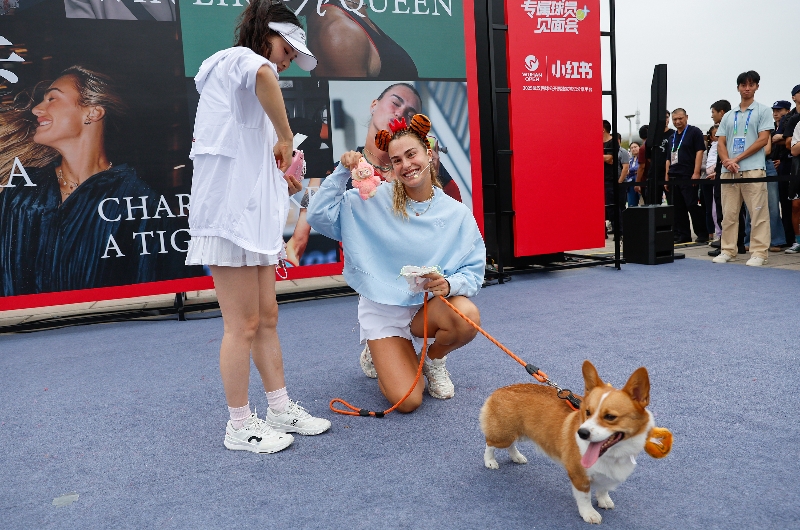
Away from competition, the contrast is striking. Sabalenka often describes herself as far more relaxed and even shy, noting a clear separation between her everyday personality and her match-day persona. That divide has become an accepted part of how she processes pressure, allowing her to channel aggression on court without carrying it off it.
Her public image blends a warrior-like aesthetic power, tattoos, visible physical strength with growing openness about vulnerability. She has spoken candidly about the impact of her father’s death and the mental strain of expectation at Grand Slams. Among peers, she is widely respected for her work ethic and willingness to evolve. The improvements in her emotional stability have matched her physical gifts, helping transform her from a streaky power hitter into a consistent threat at every major tournament.
Latest News
-
 Coco Gauff Profile
 -
Novak Djokovic ProfileNovak Djokovic: Anatomy of the Most Complete Player in Tennis16 Dec 2025 Read More
-
Iga Swiatek ProfileIga Swiatek: From Warsaw to WTA Dominance16 Dec 2025 Read More
-
Carlos Alcaraz ProfileCarlos Alcaraz: Background, Rise & Playing Style15 Dec 2025 Read More