Coco Gauff is an elite player blending athleticism with tactical growth
She became the youngest US Open champion since Serena Williams
Gauff's journey highlights discipline, structured development, and family support
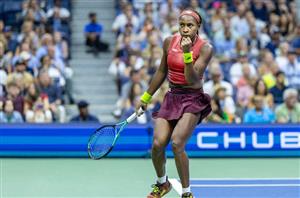
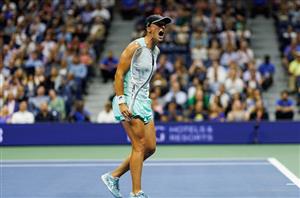
Coco Gauff in full flow, combining athletic defense with controlled aggression on a big stage — a snapshot of the intensity and composure that define her rise at the top of the WTA Tour.(credit: Getty)
Coco Gauff is an American baseliner-athlete whose game blends explosive movement, heavy topspin, and steadily improving point construction, making her one of the most complete all-surface threats on the WTA Tour in the mid-2020s. A teenage US Open champion and later a French Open winner, she represents a modern evolution of the American tennis model, built on power and athleticism, but refined through tactical growth, emotional intelligence, and resilience under sustained expectation.
From a prodigy learning the game on public courts to a global star competing under constant scrutiny, Gauff’s rise has been fast, but never accidental. Each step has been shaped by structure, adaptation, and a willingness to grow beyond early hype, turning potential into repeatable, elite-level performance.
Early Life and Background
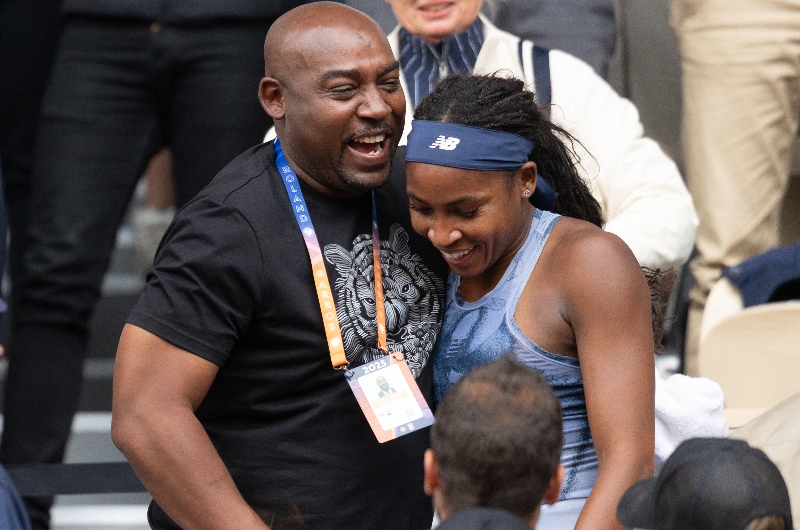
Coco Gauff celebrates with her father and longtime coach Corey Gauff, reflecting the close family support that shaped her early development and rise in the sport. (Getty Images)
Born Cori Dionne “Coco” Gauff, Coco Gauff grew up in Delray Beach, with part of her early childhood spent in Georgia before the family returned to South Florida to fully support her tennis development.
She comes from a deeply athletic household. Her father, Corey Gauff, played college basketball before working in pharmaceuticals, while her mother, Candi Gauff, was a college track athlete who later became a teacher. Coco is the eldest of three children, with two younger brothers, Codey and Cameron, and was raised in a close, structured environment where sport and education were seen as complementary rather than competing paths.
Her family history also carries broader cultural significance. Her maternal grandmother, Yvonne Lee Odom, helped integrate public schools in Delray Beach during the 1960s. Coco has often referenced that legacy as a source of perspective and grounding, particularly as her public profile has grown.
To balance training, travel, and academics, Candi chose to homeschool Coco, while Corey eventually left his job to become her primary on-court coach. From an early age, tennis was never framed as a casual pursuit. It was treated as a long-term project, built patiently around discipline, structure, and constant family support.
First Steps in Tennis
Coco Gauff was introduced to tennis at a young age through public courts and local programs in Delray Beach, with Pompey Park playing a central role in her early development. Community coaches and city-run programs provided her first structured training, while her parents encouraged her to sample multiple sports to build coordination and overall athleticism.
From the start, speed and movement separated her from her peers. Even as a child, her court coverage, balance, and recovery stood out, traits that would later become defining pillars of her professional game.
Around the age of 10, she began periodic training blocks at the Mouratoglou Academy, gaining exposure to an elite development environment without abandoning her family-led structure. From that point on, tennis was treated as a serious pathway. External academies complemented her home base rather than replacing it, allowing her to progress with added expertise while keeping stability at the core of her development.
A Carefully Managed Junior Rise
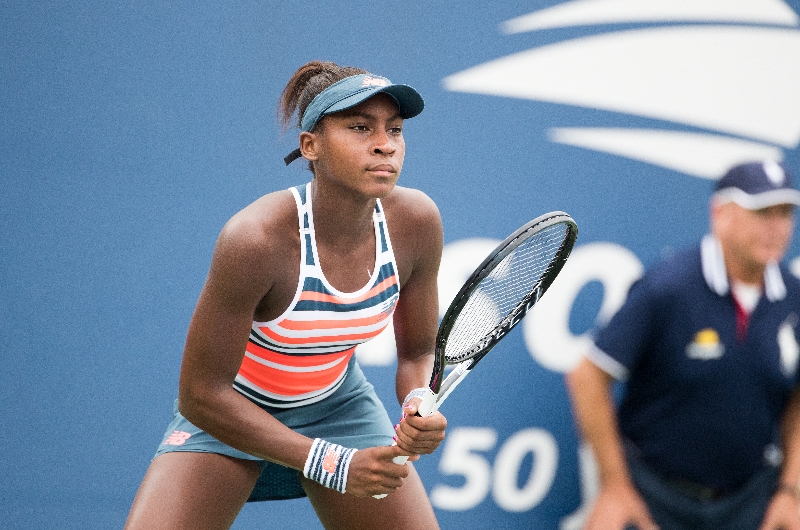
A young Coco Gauff competing on the junior circuit, her composure and athleticism already reflecting a carefully planned pathway toward the professional tour. (Getty Images
Coco Gauff’s junior résumé came together quickly and with purpose. At just 13, she reached the girls’ singles final at the US Open, becoming the youngest finalist in the event’s junior history and signalling that she was already a global-level junior, not just a domestic prospect.
A year later, at 14, she captured the girls’ singles title at Roland Garros, placing her among the youngest champions the tournament has seen. Alongside that, she produced strong results in doubles, underlining her competitive maturity and natural feel for all-court patterns.
Crucially, her junior schedule was targeted rather than overloaded. She prioritised the biggest junior stages while gradually mixing in ITF women’s events, testing herself against older, stronger opponents. By the time she stepped away from full-time junior competition, Gauff already had both major junior credentials and real professional match experience, allowing her transition to the tour to feel controlled rather than disruptive.
Turning Professional
Coco Gauff turned professional in May 2018, making her debut at an ITF event in Florida at just 14 years old. The early phase was deliberately patient. She split her time between ITF tournaments and WTA qualifying draws, focusing less on quick results and more on learning how to compete week after week against adult opposition. Ranking points came gradually, but so did resilience and match toughness.
Her global breakthrough arrived at Wimbledon in 2019. As the youngest player of the Open Era to qualify for the women’s main draw, she stunned the tennis world by defeating Venus Williams in the first round before reaching the fourth round. That run changed the narrative instantly. She was no longer viewed as a promising junior experiment, but as a legitimate tour-level competitor.
Later that same season, she captured her first WTA singles title in Linz Open, becoming the youngest player at the time to break into the WTA top 100. The win mattered because it backed up the hype. Wimbledon had introduced her to the world, but Linz confirmed that her rise was built on more than one inspired fortnight.
Breakthrough to the Elite
Coco Gauff competing on the biggest stages, her athletic defense and growing offensive confidence marking the transition from prodigy to elite contender. (Getty Images)
The next phase of Coco Gauff’s rise was about turning promise into week-to-week reliability. In 2022, she reached her first Grand Slam singles final at Roland Garros, finishing runner-up but showing she could sustain a high level across two demanding weeks on the biggest stage.
The defining breakthrough came in 2023. Gauff captured the US Open singles title, defeating Aryna Sabalenka in the final. At 19, she became the youngest American woman to win the tournament since Serena Williams, capping a summer that also included titles in Washington and Cincinnati.
That stretch reframed her career narrative. She was no longer “the future of American tennis,” but a present-day contender capable of winning anywhere. Subsequent results, including a WTA Finals title and deep runs across surfaces, reinforced her position as a fixture near the top of the tour rather than a home-Slam specialist.
Playing Style and Identity
Coco Gauff’s game is built on elite athleticism. Her speed, balance, and defensive range allow her to retrieve balls most players cannot, and she is particularly strong at turning defense into offense through quick transitions.
The backhand is her most dependable weapon. Compact and powerful, it holds up under pressure and lets her take the ball early and counter aggressive opponents. The forehand has been more variable. Naturally heavy and spin-based, it has undergone technical adjustments in recent seasons to improve reliability, especially in big moments.
Her serve is solid with clear upside, producing good pace and angles, though consistency has remained a development area. Mentally, Gauff has spoken openly about handling expectation and self-doubt, particularly early in her career. A move toward more proactive, front-foot tennis, combined with better emotional regulation, has underpinned her success at the biggest events.
Personality and Public Image
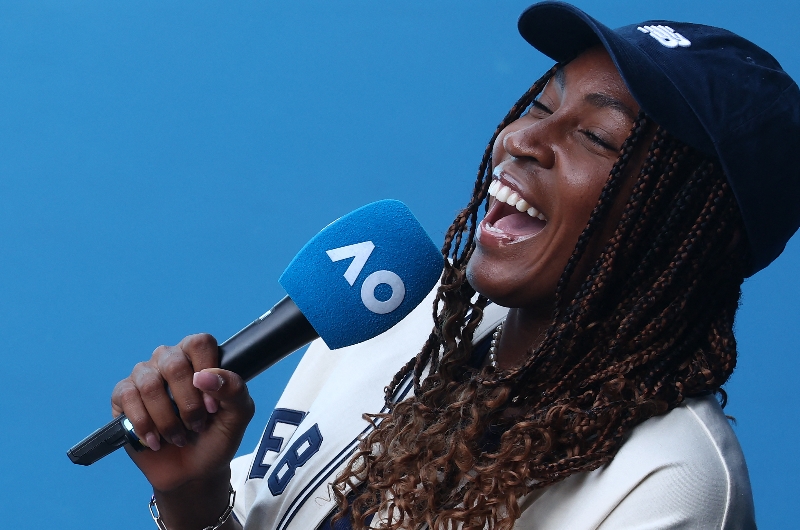
Coco Gauff off court, relaxed and expressive, reflecting the confidence, authenticity, and media ease that have made her one of the most relatable stars of her generation. (Getty Images)
On court, Coco Gauff is expressive but largely constructive. She fist-pumps, communicates with her box, and talks herself through matches, particularly when playing in front of American crowds. The emotion is present, but it is usually channelled toward focus and momentum rather than frustration.
Off the court, she is widely viewed as thoughtful, articulate, and socially aware. Comfortable speaking on issues beyond tennis, Gauff has addressed topics such as race, equality, and mental health with a maturity that stands out for her age. That openness has helped shape her image as more than just an athlete.
Despite global fame and significant commercial success, she is consistently described as grounded and family-oriented. She regularly credits her parents and her Delray Beach roots for keeping her perspective intact. Commercially, she is one of the most marketable figures in the sport, with strong crossover appeal in fashion and lifestyle media, yet her public image remains rooted in professionalism rather than celebrity excess.