Coco Gauff: Power, Poise, and a New American Era
16 Dec 2025
Read More
Jannik Sinner: Background, Early Career & Playing Style
- Jannik Sinner is a calm, methodical Italian player who reached world No. 1
- His early sports included skiing, shaping his disciplined tennis style
- Emerging without typical junior accolades, Sinner's unique path set him apart

Jannik Sinner at ease with silverware, a reflection of a rise built on consistency, composure, and quiet authority at the top of the game.
(credit: Getty)
Jannik Sinner is an Italian baseliner from the Alps who has grown into one of the defining figures of the post Big Three era. His tennis is built on clean early ball striking, compact aggression, and a rare sense of calm under pressure. What makes Sinner stand out in modern tennis is not just what he has achieved at the top of the sport, but the way he has gone about it. There has been no noise, no theatrics, just steady, methodical progression. As the first Italian man to reach world No. 1 and a multiple major champion, he has come to represent a quieter, more understated form of dominance at the very top of the game.
Early Life and Background
Born on 16 August 2001 in San Candido (Innichen), Jannik Sinner grew up in South Tyrol, a German-speaking, mountainous corner of northern Italy right on the Austrian border. He was raised in the nearby village of Sesto (Sexten), in a working, sport-first household. His parents, Johann and Siglinde, ran a local mountain refuge and restaurant, a place built around skiers, hikers, early mornings, and long days.
German was the language spoken at home, while Italian came later through school and eventually through tennis. That mix quietly shaped his identity within Italian sport, and it still shows in the way he carries himself. There has always been a slight distance, a calm self-containment that feels natural rather than cultivated. Before tennis ever became the focus, his childhood revolved around the outdoors. Winters were spent on snow, summers split between football pitches and local courts, with tennis very much a secondary option for years.
As a junior skier, Sinner was one of Italy’s standout prospects in giant slalom around the age of 12. Skiing at that level demands discipline, repetition, and comfort with speed and risk, often before most kids are even thinking about competition. Those habits translated seamlessly when he eventually committed to tennis. The early mornings, the precision, and the ability to stay composed while moving fast all became foundations of the player he would later turn into.
First Steps in Tennis
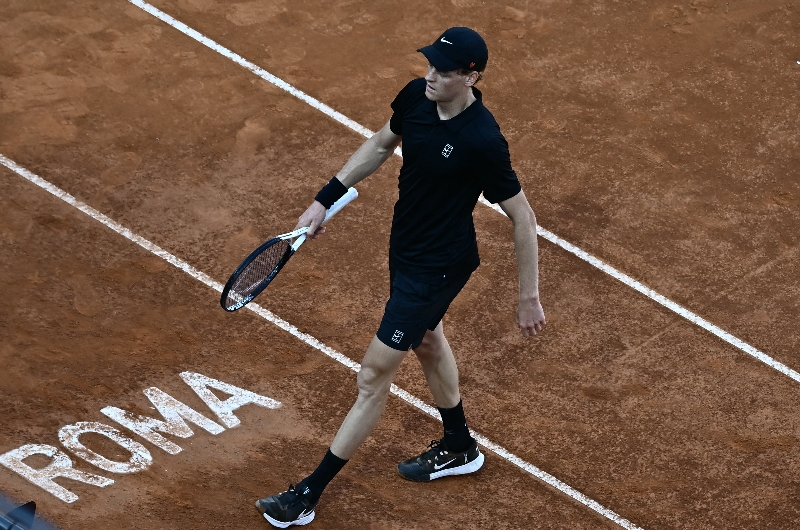
Jannik Sinner first picked up a racket around the age of seven, but tennis was nowhere near the top of his priority list early on. Skiing and football came first, and at one stage he even stepped away from tennis completely for close to a year. That pause says a lot about how undecided his sporting path really was at the time. Nothing was forced, and nothing felt inevitable yet.
When he returned to the sport, his training was still very much local. He worked at Tennis San Giorgio under Heribert Mayr, who quickly noticed that Sinner’s timing and coordination were on a different level from most kids his age. The ball came off the racket cleanly, early, and with very little wasted movement. As his development picked up pace, it became clear that tennis offered a far more sustainable long-term future than skiing, especially given his physical build and how rapidly his game was improving.
The real turning point came in his early teens. Around 13 or 14, Sinner made the life-changing decision to leave home and move to Bordighera, on the Italian Riviera, to train at Riccardo Piatti’s academy. It was a massive step for someone that young. Suddenly he was immersed in a fully professional environment, practicing alongside older players who were already established on tour. That move marked the moment when tennis stopped being one option among many and became the clear, singular focus of his life.
Junior Career: A Different Path
This is where Jannik Sinner already started to look different from the typical elite prospect. He never built the kind of junior résumé that usually screams future superstar. He played the ITF junior circuit, but his ranking topped out around the 130s, and there were no junior Grand Slam titles or headline results that pushed him into the spotlight early. If you were only tracking junior trophies, there was very little to suggest what was coming next.
Instead, his team made a conscious decision to move him into the professional ranks earlier than most. Rather than chasing junior points or year end junior rankings, Sinner spent his time grinding through Futures events and lower level men’s tournaments. To a casual fan, that choice made his later breakthrough look sudden, almost out of nowhere. There was no long build up of junior dominance to follow, no obvious trail of junior success to connect the dots.
But in reality, this route exposed him to exactly what matters at the top level much sooner. He learned to deal with heavier balls, stronger opponents, longer matches, and the mental pressure of playing grown professionals who were fighting for their careers. That experience hardened his game and mindset early, and it fit perfectly with Riccardo Piatti’s long-term philosophy. The focus was never on collecting youth accolades. It was about raising the ceiling, managing growth carefully, and preparing a teenager to survive and eventually thrive on the full professional tour.
Turning Professional
This was the phase where Jannik Sinner quietly became a professional in every sense. In 2018, at just 16 going on 17, he started competing regularly on the ITF Men’s Circuit, essentially marking the real beginning of his pro career. With no ranking to speak of, he was grinding through Futures events, learning the basics of life on tour, while the occasional wildcard into Challenger tournaments gave him an early look at a much higher level of opposition.
By the end of that season, he had already pushed his way into the mid 500s of the rankings, a sharp rise from complete obscurity. But the real value of that year was not about results or titles. It was about adaptation. He learned how to handle weekly travel, quick turnarounds, and the physical toll of best of three set matches against older, stronger players who knew how to compete. Long before the wins started to make headlines, this stretch hardened him. It taught him how to live like a professional, and that foundation would quietly pay off when the spotlight finally arrived.
Breakthrough Moments
By 2019, everything started to move faster for Jannik Sinner. Still only 17, he began winning Challenger titles, not just one, but multiple in the same season. That alone put him in rare territory. Very few players his age manage to dominate that level so quickly, and when they do, it usually means their game is already ahead of the curve.
At the same time, he was giving glimpses of himself on the ATP Tour. Early wins at tournaments like the Italian Open and Croatia Open Umag caught attention inside the sport. These were not fluke results or soft draws. He was beating established tour players and doing it without looking overwhelmed by the occasion. Those performances pushed him inside the top 200 and confirmed that his level was already good enough to survive, and compete, on the main tour.
Soon after turning 18, he qualified for his first Grand Slam main draw at the US Open. He lost his debut match to an experienced seed, but that was never the point. Just being there mattered. It was a psychological step forward and a perception shift, both for him and for the people watching closely. From there, the trajectory became clearer with each passing season. Deeper Slam runs, wins over top players, and a steady rise that felt earned rather than rushed. Slowly, the language around Sinner changed. He stopped being framed as a talented teenager and started being talked about as something more serious. Not a prospect anymore, but a future world No. 1 in waiting.
Playing Style and Identity
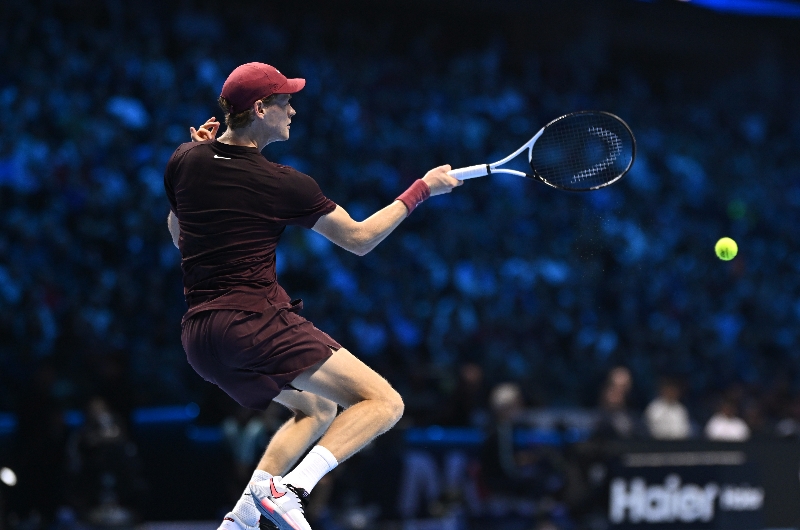
His compact backswing and efficient footwork let him redirect pace with very little preparation, which is why he is so comfortable holding an aggressive court position, especially on hard and grass courts. As his career has progressed, the serve has quietly become a real weapon. The pace is up, the locations are sharper, and it has translated into more free points and far cleaner service games, taking pressure off the rest of his game.
Mentally, this is where he separates himself. Sinner is almost unnervingly composed. You rarely see frustration or emotional swings, just constant adjustment and problem-solving. He knows when to stay patient and when to pull the trigger, and that balance defines his tennis. His clean timing naturally suits faster surfaces, but his balance, movement, and backhand stability give him repeatable patterns even on slower, higher-bouncing courts. That adaptability is a big reason his level travels so well across the tour.
Personality and Public Image
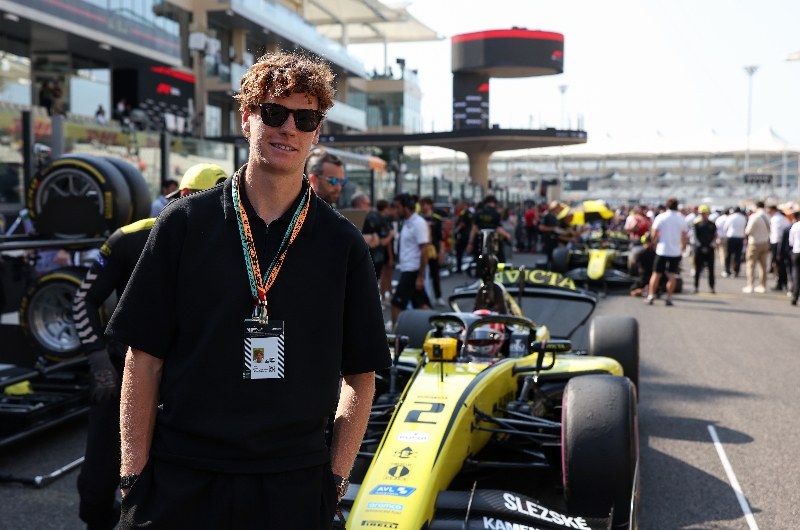
Off the court, the tone stays consistent. In press settings, he is concise and measured, rarely chasing headlines or sound bites. Wins and losses are framed as checkpoints rather than endpoints, always part of a longer process rather than moments to overreact to. That mindset has earned him a strong reputation among peers and fans alike. He is widely seen as humble, respectful, and relentlessly professional.
Even with major sponsorships and global exposure, Sinner is still positioned as a quiet star. The image leans heavily on his grounding rather than glamour, with a clear link back to his South Tyrol roots instead of any pull toward celebrity culture. In a sport that often rewards noise, his appeal has grown by doing the opposite.
Latest News
-
 Coco Gauff Profile
 -
Novak Djokovic ProfileNovak Djokovic: Anatomy of the Most Complete Player in Tennis16 Dec 2025 Read More
-
Sabalenka ProfileAryna Sabalenka: The Making of a Powerhouse16 Dec 2025 Read More
-
Iga Swiatek ProfileIga Swiatek: From Warsaw to WTA Dominance16 Dec 2025 Read More
-
Carlos Alcaraz ProfileCarlos Alcaraz: Background, Rise & Playing Style15 Dec 2025 Read More